Armor in Escape from Tarkov stops bullets outright or lets them through. There is no partial protection, so what you wear only matters against the rounds it can actually stop. Ammo and penetration explains the roll. This page is about choosing the armor.
The numbers on a piece of armor
| Value | What it means |
|---|---|
| Armor class | 1 to 6. What a round's penetration is weighed against |
| Durability | How much wear it can take. Protection falls as the remaining percentage falls |
| Material | How fast it wears and how well it repairs |
| Protects | The body areas it covers. Anything not listed is open |
| Movement, turn speed and ergonomics | The price you pay for wearing it |
The areas armor can cover are the head top, nape, ears, eyes, jaws and face, the throat and back of the neck, the thorax, stomach, back and sides, and the shoulders, groin and buttocks. The armpits cannot be covered by anything.
Soft armor and plates
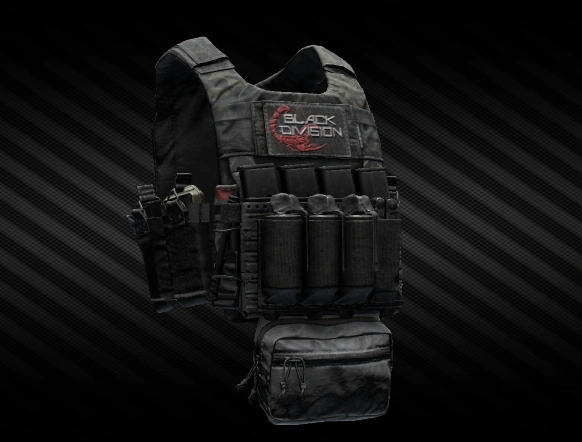
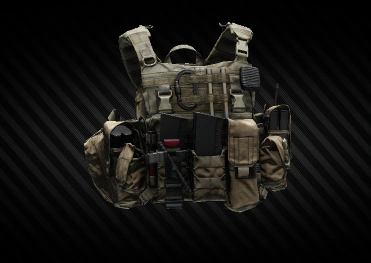
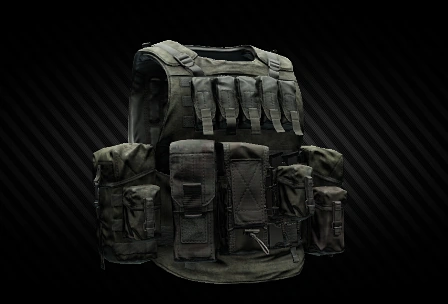
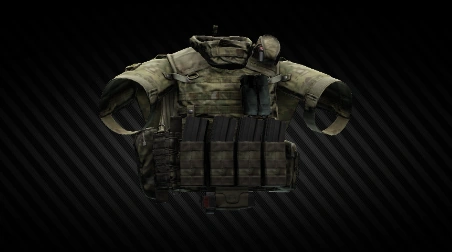
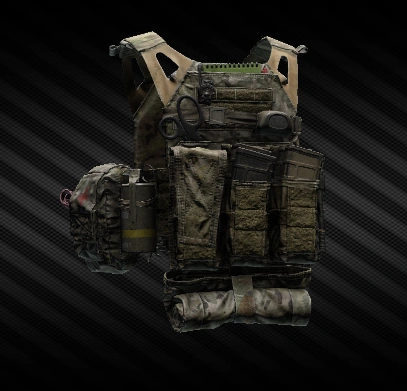
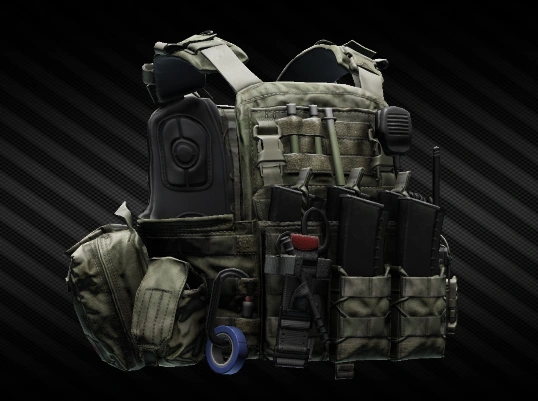
Most vests are two things in one. The vest itself is soft armor of a low class that covers a wide area. Pockets in it hold plates of a higher class that cover the front, back and sometimes the sides.
- The PACA Soft Armor is soft armor only: class 2 over the thorax, stomach, back and sides.
- The Interceptor OTV has the same class 2 soft armor and comes with two class 4 plates, front and back.
- A plate carrier such as the Hexatac HPC has no soft armor at all. Its two class 5 plates are all the protection it gives.
So a vest page shows two classes: its own, and the class of the plates it comes with. Plates can be taken out and swapped, which is how a cheap vest gets better and how a damaged plate gets replaced. Soft armor behind a plate also lowers the blunt damage of a stopped bullet.
| Armor | Armor class | Durability | Material | Protects | Weight | Sold by |
|---|---|---|---|---|---|---|
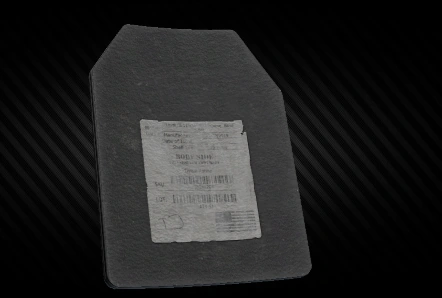 Cult Termite ballistic plate | 6 | 65 | Titan | Front Plate, Back Plate | 3.85 kg | — |
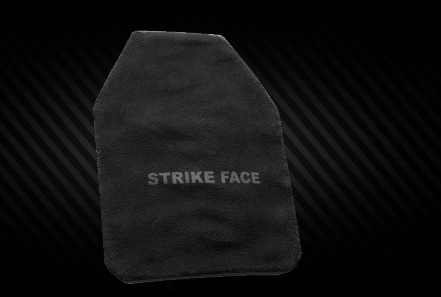 ESAPI level IV ballistic plate | 6 | 55 | Ceramic | Front Plate, Back Plate | 3.2 kg | — |
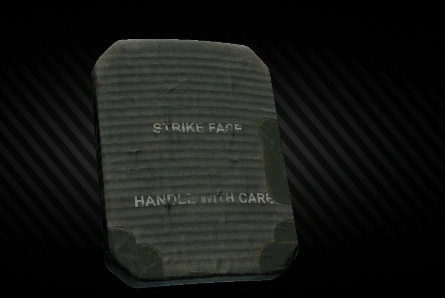 ESBI level IV ballistic plate (Side) | 6 | 18 | Ceramic | Left Plate, Right Plate | 1.15 kg | — |
| GAC 4sss2 ballistic plate | 6 | 50 | Ultra high molecular weight polyethylene | Front Plate, Back Plate | 2.7 kg | — |
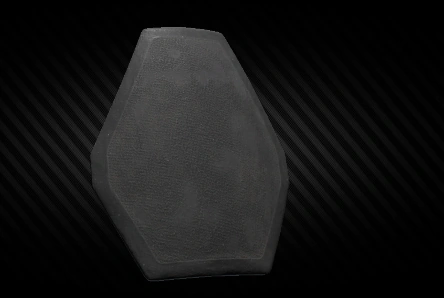 Granit 4RS ballistic plate (Front) | 6 | 55 | Ceramic | Front Plate | 3.5 kg | — |
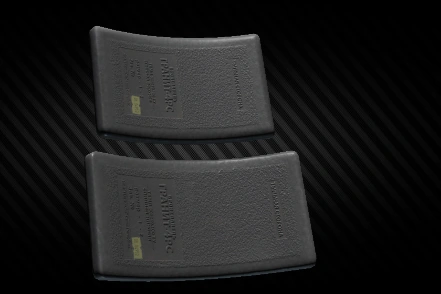 Granit 4RS ballistic plates (Back) | 6 | 50 | Ceramic | Back Plate | 3.8 kg | — |
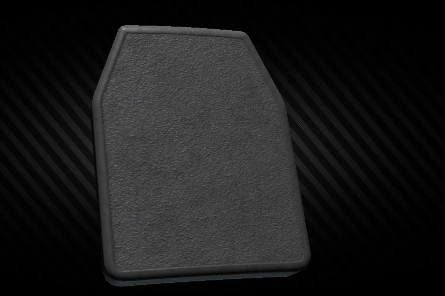 Granit ballistic plate (Side) | 6 | 20 | Ceramic | Left Plate, Right Plate | 1.3 kg | — |
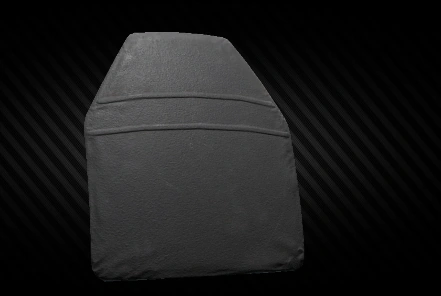 Granit Br5 ballistic plate | 6 | 60 | Ceramic | Front Plate, Back Plate | 3.3 kg | — |
| Kiba Arms Steel ballistic plate | 6 | 50 | Armor steel | Front Plate, Back Plate | 5.1 kg | — |
| KITECO SC-IV SA ballistic plate | 6 | 45 | Ultra high molecular weight polyethylene | Front Plate, Back Plate | 2.45 kg | — |
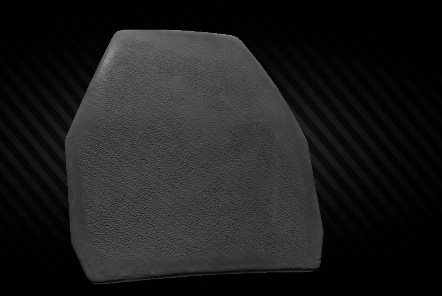 Korund-VM-K ballistic plate (Back) | 6 | 45 | Ceramic | Back Plate | 2.7 kg | — |
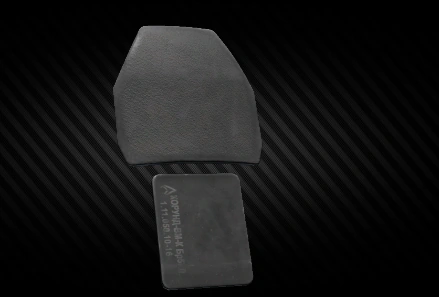 Korund-VM-K ballistic plates (Front) | 6 | 60 | Ceramic | Front Plate | 4 kg | — |
| NESCO 4400-SA-MC ballistic plate | 6 | 60 | Combined materials | Front Plate, Back Plate | 3.6 kg | — |
| Cult Locust ballistic plate | 5 | 60 | Titan | Front Plate, Back Plate | 2.56 kg | — |
| GAC 3s15m ballistic plate | 5 | 45 | Ultra high molecular weight polyethylene | Front Plate, Back Plate | 0.97 kg | — |
| Granit 4 ballistic plate (Front) | 5 | 50 | Ceramic | Front Plate | 3.05 kg | Prapor LL4, after completing his task The Art of Explosion; Ref LL4 |
| Granit 4 ballistic plates (Back) | 5 | 45 | Ceramic | Back Plate | 3.3 kg | — |
| Granit Br4 ballistic plate | 5 | 55 | Ceramic | Front Plate, Back Plate | 2.9 kg | — |
| Korund-VM ballistic plate (Back) | 5 | 40 | Armor steel | Back Plate | 2.3 kg | Prapor LL3 |
| Korund-VM ballistic plates (Front) | 5 | 60 | Armor steel | Front Plate | 3.4 kg | Prapor LL4 |
Materials
Each hit removes durability, and the material is part of how much. Destructibility is one of the values that go into that calculation: lower is tougher. It is not the whole formula, so read it as a guide and not as an exact ranking.
| Material | Destructibility | Repair quality, kit | Repair quality, trader |
|---|---|---|---|
| Aramid | 0.1875 | 1 | 1 |
| Ultra high molecular weight polyethylene | 0.3375 | 3 | 2.5 |
| Combined materials | 0.375 | 0.4 | 0.4 |
| Titan | 0.4125 | 0.63 | 0.63 |
| Aluminium | 0.45 | 0.63 | 0.63 |
| Armor steel | 0.525 | 3 | 2.5 |
| Ceramic | 0.6 | 0.26 | 0.26 |
| Glass | 0.6 | 0.15 | 0.15 |
Read together: aramid has the lowest destructibility. Polyethylene and steel repair best, three times as well as aramid. Of the materials used for vests, plates and helmets, ceramic is the worst on both counts. Glass is only found in visors and eyewear.
Repairs
A repair restores durability but lowers the maximum, and how much it lowers depends on who does it and on the material. The penetration roll compares what is left with the original maximum, not the repaired one: a plate that started at 60 and now reads 45 of 45 protects like a plate at 75%.
| Repaired by | Quality | Cost |
|---|---|---|
| Body armor repair kit | 1.33 on polyethylene and steel, 1.1 on the rest | About 0.4 |
| Prapor | 0.83 | 0.83 |
| Skier | 1 | 1 |
| Mechanic | 1.43 | 1.23 |
The numbers are multipliers, so higher quality is better and higher cost is dearer. Mechanic repairs best and charges most. The kit comes second on quality and is the cheapest for most vests, armored rigs, helmets and eyewear. A trader's repair price also rises with your loyalty level.
Repair kits need the Lavatory at level 1. Upgrading it to level 3 improves the result, and so do the Intellect, Light Vests and Heavy Vests skills.
Body armor
| Armor | Armor class | Durability | Material | Class of the included plates | Weight | Sold by |
|---|---|---|---|---|---|---|
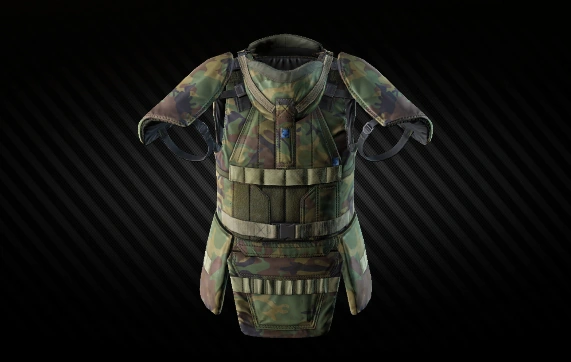 FORT Redut-T5 body armor (Smog) | 3 | 354 | Aramid | 5 | 8.1 kg | — |
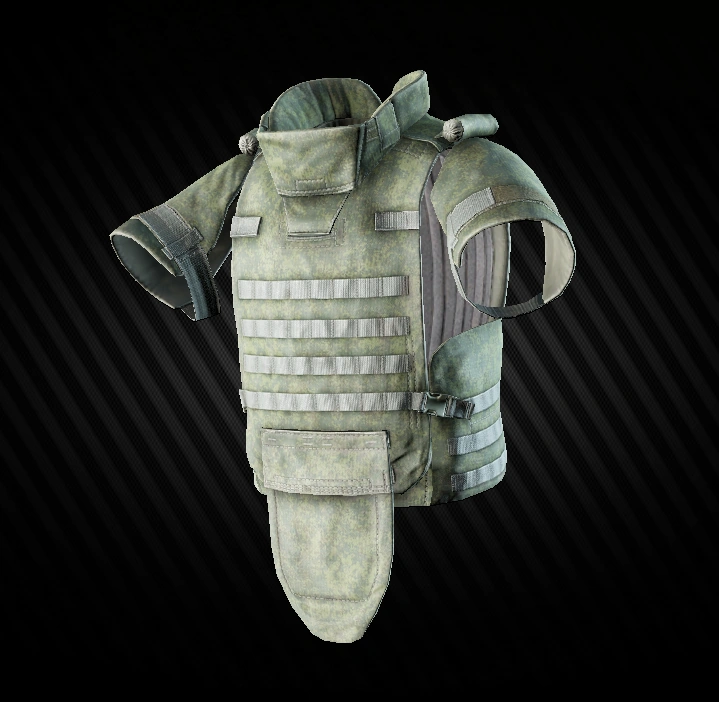 6B43 Zabralo-Sh body armor (EMR) | 3 | 350 | Aramid | 6 | 10.8 kg | Ref LL4 |
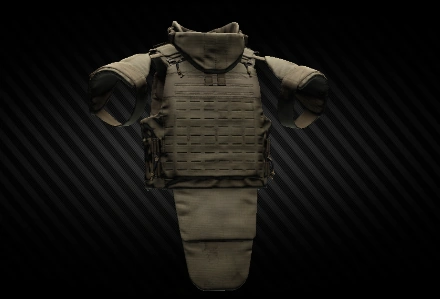 NFM THOR Integrated Carrier body armor | 3 | 310 | Aramid | 6 | 8.5 kg | — |
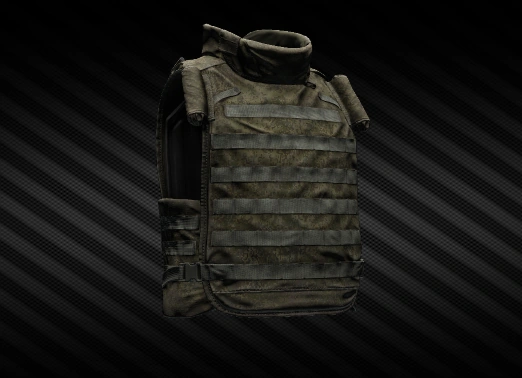 6B45 body armor (EMR) | 3 | 254 | Aramid | 5 | 3.65 kg | Prapor LL3 (Without plates) |
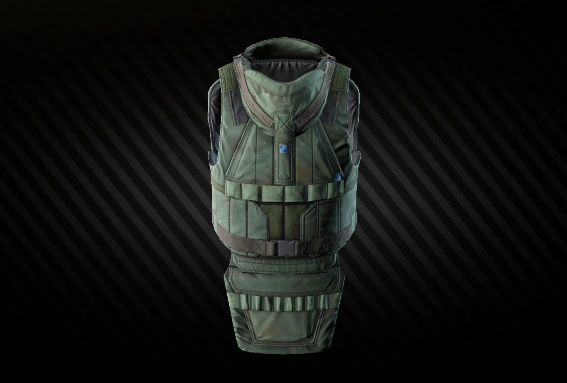 FORT Redut-M body armor | 3 | 248 | Aramid | 5 | 7.7 kg | — |
 FORT Redut-M body armor (Black) | 3 | 248 | Aramid | 5 | 7.7 kg | Ref LL4, after unlocking it in Arena BattlePass Season 2 |
 FORT Redut-M body armor (Prisoner of the Arena) | 3 | 248 | Aramid | 5 | 7.7 kg | Ref LL4, after unlocking it in Echo Belli crate |
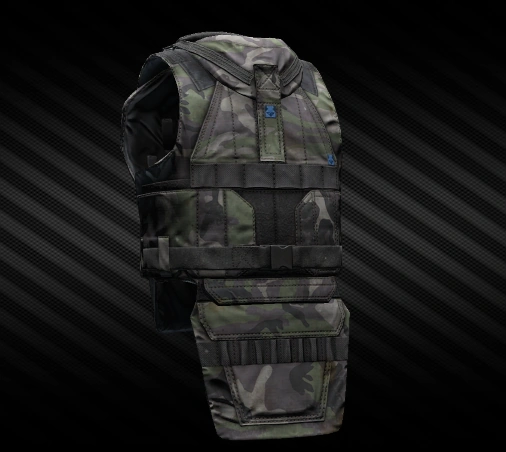 FORT Redut-M body armor (SK Woodland) | 3 | 248 | Aramid | 5 | 7.7 kg | Ref LL4, after unlocking it in Arena BattlePass Season 0 |
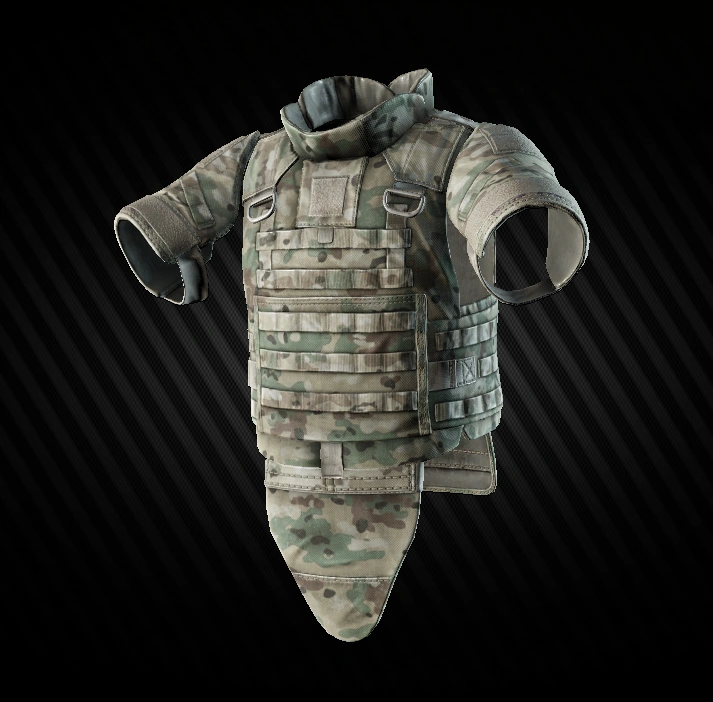 IOTV Gen4 body armor (Full Protection Kit, MultiCam) | 3 | 248 | Aramid | 5 | 9.08 kg | — |
 FORT Gladiator-S plate carrier (Gray) | 3 | 235 | Aramid | 5 | 3.31 kg | Ref LL4, after unlocking it in Arena BattlePass Season 2 |
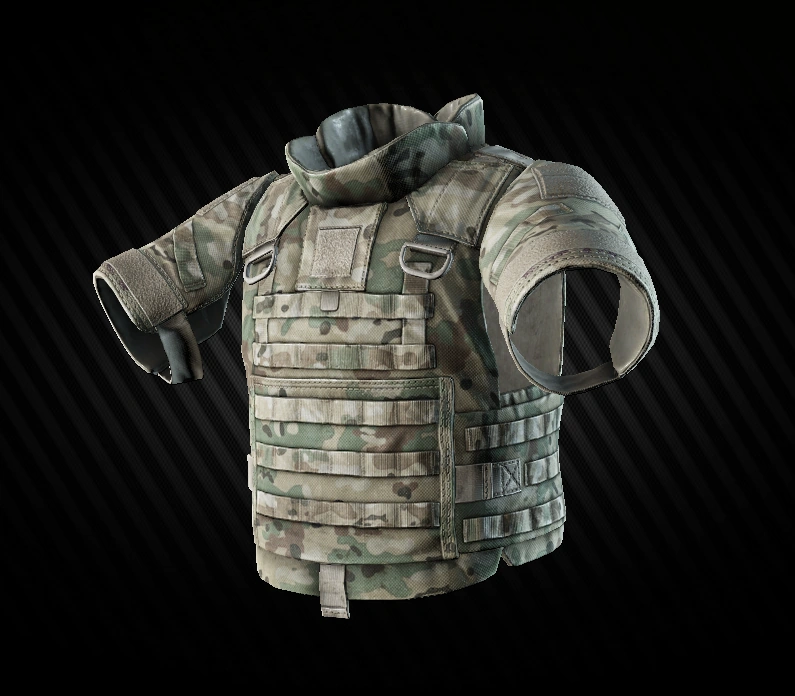 IOTV Gen4 body armor (Assault Kit, MultiCam) | 3 | 212 | Aramid | 5 | 8.18 kg | Ragman LL4, after completing his task Textile - Part 1 (USEC only) |
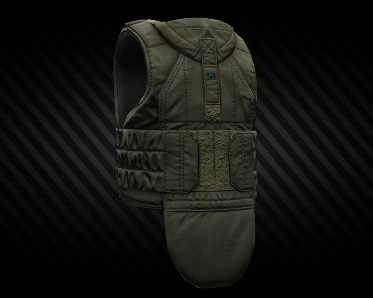 FORT Defender-2 body armor | 3 | 210 | Aramid | 5 | 5.7 kg | — |
 FORT Defender-2 body armor (Flecktarn) | 3 | 210 | Aramid | 5 | 5.7 kg | Ref LL4, after unlocking it in Arena BattlePass Season 2 |
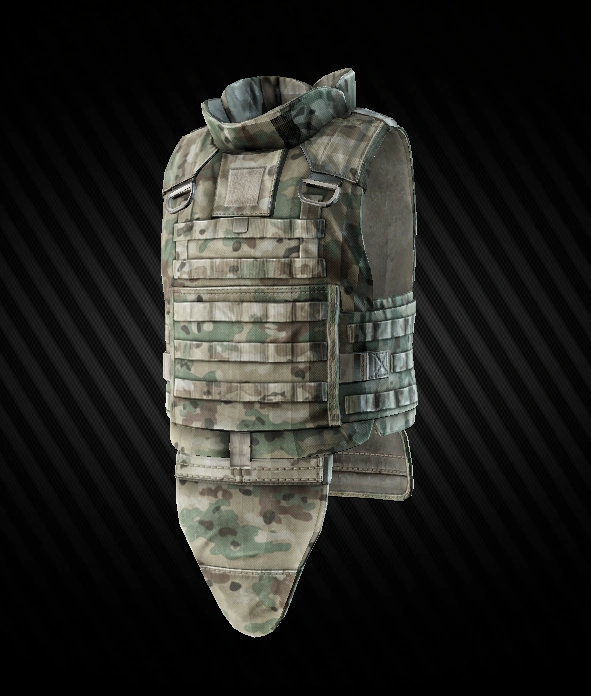 IOTV Gen4 body armor (High Mobility Kit, MultiCam) | 3 | 200 | Aramid | 5 | 7.88 kg | Ref LL4, after completing Ragman's task Drip-Out - Part 2 (USEC only) |
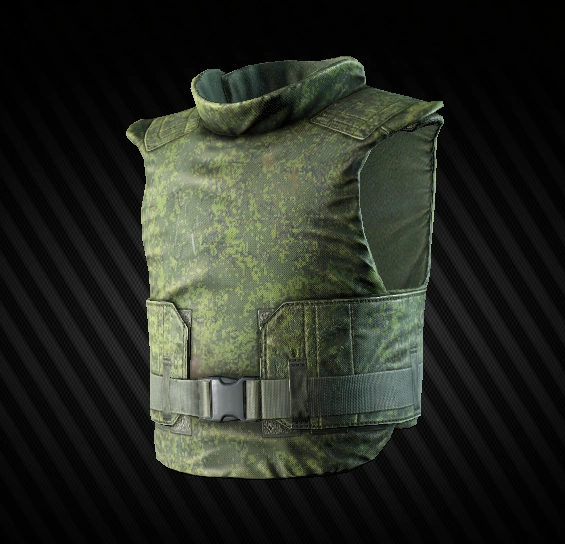 BNTI Zhuk body armor (EMR) | 3 | 165 | Aramid | 6 | 2.97 kg | Ref LL4 |
What the first two loyalty levels sell:
| Vest | Soft armor | Plates included | Weight | Sold by |
|---|---|---|---|---|
| PACA Soft Armor | Class 2, aramid | None | 3.5 kg | Ragman, level 1 |
| 6B2 (Flora) | Class 2, titan | None | 5.4 kg | Prapor, level 1 |
| Kora-Kulon (EMR) | Class 3, steel | None | 11.1 kg | Prapor, level 1 |
| MF-UNTAR | Class 3, aluminium | None | 8.5 kg | Peacekeeper, level 2 |
| 6B23-1 (EMR) | Class 2, aramid | Class 3, front only | 3.3 kg | Ragman, level 2 |
| Kirasa-N | Class 2, aramid | Class 3, front and back | 3 kg | Ragman, level 2 |
| Interceptor OTV (UCP) | Class 2, aramid | Class 4, front and back | 3.8 kg | Ref, level 2 |
Armor can also be part of your rig. An armored chest rig goes in the rig slot and blocks the body armor slot.





Helmets
A helmet is the one piece of armor where the angle of a hit matters. A bullet that strikes at a shallow angle can ricochet, and each helmet has its own ricochet chance. A ricochet counts as a stopped bullet and costs the helmet almost nothing.
Two penalties are specific to helmets. Sound reduction is rated None, Low or High: the higher it is, the less you hear. And some helmets block other slots: the DevTac Ronin covers eyes and jaws but leaves no room for eyewear.
| Helmet | Class | Durability | Ricochet | Sound reduction | Sold by |
|---|---|---|---|---|---|
| SSSh-94 SFERA-S | 3 | 135 | Medium | High | Prapor, level 1 |
| FORT Kiver-M | 3 | 63 | Medium | High | Ragman, level 1 |
| SSh-68 | 3 | 54 | High | None | Ragman, level 1 |
| UNTAR | 3 | 45 | High | Low | Peacekeeper, level 1 |
| ZSh-1-2M | 4 | 63 | Medium | High | Ragman, level 2 |
| MSA ACH TC-2001 | 4 | 30 | High | None | Peacekeeper, level 2 |
| Armor | Armor class | Durability | Ricochet chance | Sound reduction | Weight | Sold by |
|---|---|---|---|---|---|---|
 Altyn assault helmet (Impact Tested) | 5 | 81 | High | High | 2.5 kg | Ref LL4, after unlocking it in Panacea crate |
 Altyn assault helmet (Olive Drab) | 5 | 81 | High | High | 2.5 kg | Ref LL4 |
 Rys-T assault helmet (Black) | 5 | 90 | High | High | 2.5 kg | — |
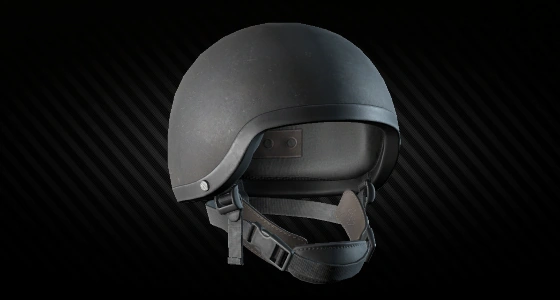 Vulkan-5 LShZ-5 bulletproof helmet (Black) | 5 | 75 | High | High | 4.5 kg | — |
 Vulkan-5 LShZ-5 bulletproof helmet (Camouflage) | 5 | 75 | High | High | 4.5 kg | Ref LL4, after unlocking it in Arena BattlePass Season 1 |
 Vulkan-5 LShZ-5 bulletproof helmet (Eight-ball) | 5 | 75 | High | High | 4.5 kg | Ref LL4, after unlocking it in the Customs Tactical Map |
 Vulkan-5 LShZ-5 bulletproof helmet (Flame) | 5 | 75 | High | High | 4.5 kg | Ref LL4, after unlocking it in Arena BattlePass Season 1 |
 Atlant Armour Titan Aramid helmet (EMR) | 4 | 48 | High | None | 1.58 kg | Ref LL4, after unlocking it in the The Lab Tactical Map |
 Atlant Armour Titan Aramid helmet (MultiCam) | 4 | 48 | High | None | 1.58 kg | Ref LL4, after unlocking it in Echo Belli crate |
 Atlant Armour Titan Aramid helmet (OD Green) | 4 | 48 | High | None | 1.58 kg | Ref LL4, after unlocking it in Arena BattlePass Season 2 |
 Atlant Armour Titan Aramid helmet (Rudiarius) | 4 | 78 | High | None | 3.42 kg | Ref LL4, after unlocking it in Arena BattlePass Season 2 |
 Ballistic Armor Co. Bastion helmet (Armor Black) | 4 | 50 | High | None | 1.44 kg | — |
 Ballistic Armor Co. Bastion helmet (MultiCam) | 4 | 50 | High | None | 1.44 kg | — |
 Ballistic Armor Co. Bastion helmet (OD Green) | 4 | 50 | High | None | 1.44 kg | — |
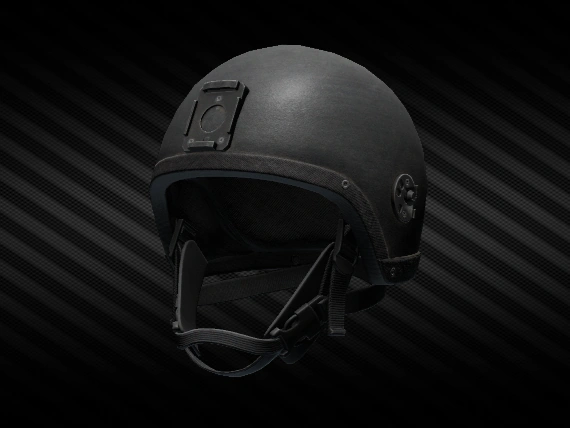 BNTI LShZ-2DTM helmet (Black) | 4 | 99 | High | High | 3.4 kg | Ragman LL4 |
Visors and extra plates for helmets are listed under visors and helmet add-ons. Headsets work the other way round from a helmet's sound reduction: they make quiet sounds such as footsteps louder and dampen gunshots.
Related pages
- Ammo and penetration
- Health and healing
- Insurance: armor is the gear most worth insuring.
- Hideout